
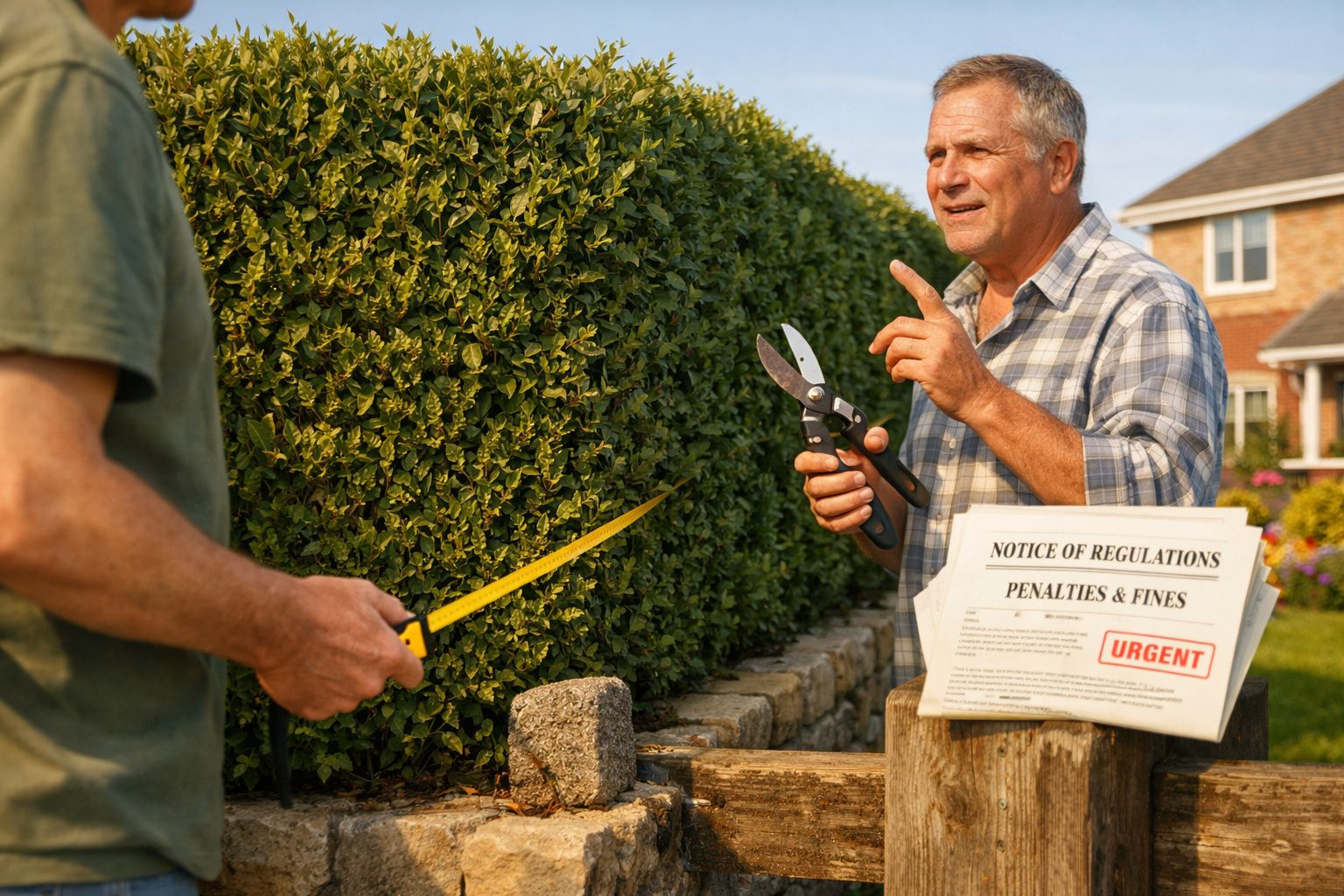
Saturday morning, 8:12 a.m. The coffee is ready, the house is still quiet, and then the buzz of a hedge trimmer cuts through the calm from next door. Through the kitchen window, you spot your neighbour, still half asleep, going after his giant laurel hedge as if it had personally offended him. Branches tumble across the boundary, he checks the line, then your bedroom window, then the time. The weekend mood is gone in seconds.
It’s the kind of scene that feels almost ordinary in a row of houses or on a suburban street. Hedges that were once planted for privacy can end up drawing the sharpest boundary between properties. And from 15 February, those green screens are about to become a legal headache for thousands of homeowners.
A small detail in the law is enough to shake up a lot of gardens.
New rules that change everything for tall hedges
From 15 February, the rule is simple: if a hedge is more than 2 metres high and planted less than 50 cm from the neighbour’s boundary, it has to be cut back. Too high and too close? Then you’re no longer in the clear, even if the hedge has been there “for ages” and no one complained before.
On paper, it sounds technical and a bit distant. In practice, it means revisiting long runs of greenery. We’re talking about those tall walls of thuja, cypress, laurel or bamboo that people once saw as the ideal way to block the view. The same hedges that now risk bringing warnings, fines and frosty exchanges over the fence.
Picture a typical plot on a quiet street. On one side, a family planted a row of conifers ten years ago. At the time, the shrubs barely came up to the waist. The landscaper said they would “thicken up nicely” and, indeed, they did. Today they rise above the gutter, forming a 3-metre wall just 30 cm from the boundary.
The neighbour said nothing for a long time. Then the branches started encroaching on his gutter and casting his kitchen into near-permanent shade. He went to the câmara municipal, asked a few questions, and found out about the tightened rules. Since last autumn, he’s been looking at that hedge like it’s a time bomb. On 15 February, he knows he’ll have a stronger legal argument.
At the heart of the change is a very straightforward idea: cut down disputes and protect light and safety. Tall hedges planted too close can block visibility near driveways, damage fences and even create damp problems on adjoining walls.
Local authorities are already dealing with complaints about “green walls” that become oppressive. The law now gives a clear benchmark: height versus distance. More than 2 metres high? Then it needs to be at least 50 cm from the boundary. That becomes a sort of golden rule for peaceful cohabitation. The hedge stops being just decoration. It becomes a legal issue with clear limits.
How to react if your hedge is too tall and too close
First reaction: don’t panic, but don’t delay either. The worst thing would be to act as if nothing is happening and hope no one notices. Start by measuring: the height from the ground to the top of the hedge, and the horizontal distance from the centre line of the trunks to the property boundary. A tape measure and a second pair of hands are enough.
If you’re above 2 metres and within 50 cm of the line, you’re exposed. At that point, there are two realistic options: bring the hedge down to a legal height or plan a gradual removal and replanting further back. The second route takes longer, but it often leads to a better, healthier garden over time.
This is where many people slip up: they grab the first trimmer, rush the job and end up with a butchered hedge. Or worse, with neighbours even more irritated than before. Try to plan the work, especially if the hedge is old and dense. Cutting a 3.5-metre wall down to 2 metres in one go can shock the plant and leave an ugly skeleton of brown branches.
Talking to your neighbour before you start can prevent a lot of drama. A quick word over the fence, a coffee to explain what you’re planning, and sometimes even a hand with the clippings. We’ve all seen it: that moment when a bit of warning would have saved a big row.
Sometimes, the best legal strategy is simply a calm conversation at the right time. As one neighbourhood mediator summed it up: “People think they’re fighting over branches. Most of the time, they’re really fighting over respect.”
-
Step 1: Measure and check the rule
Hedge height, distance to the boundary, quick call to the câmara municipal or a look at the local rules. -
Step 2: Plan the pruning or replanting
Choose a date, consider a professional, and think about green waste disposal and access. - Step 3: Talk with your neighbour
- Step 4: Keep written records
-
Step 5: Keep on top of it every year
Prune regularly instead of waiting five years and ending up with a jungle again.
Hedges, neighbors, and the thin line between privacy and conflict
Behind these new limits is a bigger question: what kind of privacy do we actually want? For years, we’ve planted hedges the way we buy curtains: to shut out the outside world and create a bubble. But these green walls can turn into breeding grounds for resentment, with the last bit of conversation between houses disappearing.
This new rule is forcing a kind of reset. Some people will grumble, others will use it as a reason to rethink the garden. Lower hedges, mixed shrubs, slatted fences with climbing plants… There are plenty of ways to feel at home without living in a fortress. A garden breathes better when it doesn’t feel the need to prove anything.
| Ponto-chave | Detalhe | Valor para o leitor |
|---|---|---|
| Altura e distância legais | Sebes com mais de 2 m e a menos de 50 cm do limite devem ser reduzidas ou afastadas a partir de 15 de fevereiro | Perceber se a sua sebe está em risco e evitar multas ou notificações formais |
| Plano de ação | Medir, planear a poda ou replantação, falar com os vizinhos, registar os passos | Roteiro prático para cumprir a regra e manter a calma |
| Gestão a longo prazo | Poda regular e ligeira, e distâncias de plantação bem pensadas | Poupar dinheiro, preservar as plantas e manter a paz do outro lado da vedação |
FAQ:
- What happens if I refuse to cut my hedge?
Your neighbour can first send a formal request, then go to the local authorities or a court. You may be ordered to trim or reduce the hedge, possibly under threat of fines or daily penalties if you still refuse.- Does this rule apply if my hedge is older than 30 years?
Older hedges do not automatically escape the rules. Local rules and case law can vary, so it’s worth checking with the câmara municipal or a legal adviser, especially if there’s a written agreement or a very old setup.- Who pays for the trimming of the hedge?
As a rule, the hedge owner pays for maintenance. If branches cross the boundary and fall onto your neighbour’s property, they may cut what overhangs, but responsibility for the plant still remains with you.- Can my neighbour cut my hedge without asking?
They may cut what clearly overhangs their side of the boundary, but only on their own side. They cannot enter your property or damage the hedge deeply. Any heavy cutting without your consent can be challenged.- Is calling a professional gardener mandatory?
No, you can do it yourself if it is safe and practical. That said, for very tall or dense hedges, a professional with the right equipment and insurance is often the wiser choice. Let’s be honest: nobody does this every day.






Comentários
Ainda não há comentários. Seja o primeiro!
Deixar um comentário